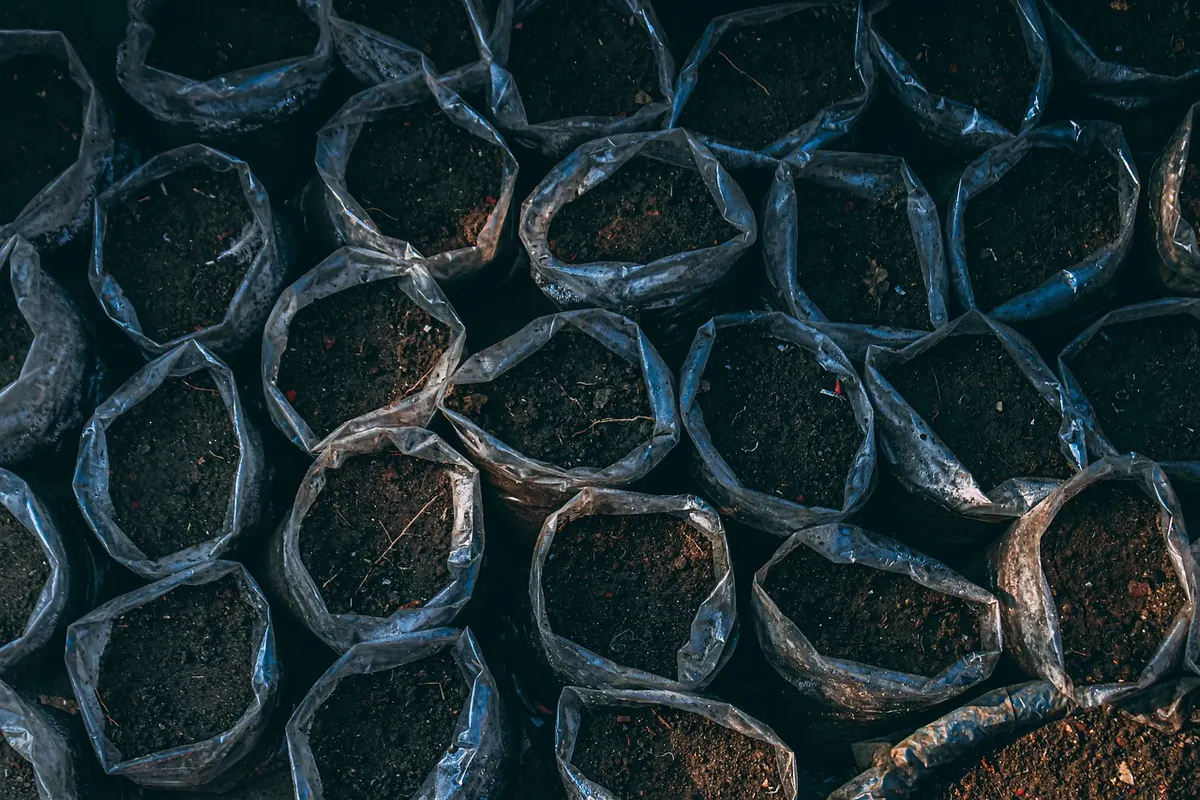
The envelope from the lab looks official and faintly accusatory: a grid of ppm figures, a bar chart marked low, medium and high, a pH value with a second number tucked beside it. Most gardeners read the pH line, feel a small pang of guilt, and then buy whichever box the garden centre has stacked by the till. The report deserves better than that. It isn't a grade on your gardening. It's a description of a starting point, and once you know which numbers actually change your shopping list, the whole page becomes oddly readable.
A routine lab report holds more data than a garden needs. Read it in a fixed order and the noise drops away:
Everything else — the lbs/acre columns, the saturation percentages, the little asterisks — is supporting detail. Useful later, not on the first pass.
pH measures acidity on a scale from 0 to 14, and the reading changes how available every other nutrient is. Around 6.0 to 6.8, most vegetables and annual flowers can reach what they need. Blueberries, rhododendrons and camellias want 4.5 to 5.5 and sulk above it. Lavender, rosemary and thyme prefer something closer to neutral or slightly alkaline. There is no single correct pH, only a correct pH for what you're growing.
That second number matters as much as the first. Buffer pH (some labs call it lime requirement or reserve acidity) estimates how hard the soil will push back. A sandy loam at pH 5.8 with a buffer pH of 6.9 needs a light touch. A clay at the same pH with a buffer pH of 6.2 needs considerably more lime to travel the same distance. This is why copying a neighbour's lime dose is a poor idea — same pH, different soil, different answer.
Lime raises pH; elemental sulfur lowers it. Both work through the soil rather than on it. Lime should be incorporated, ideally in autumn or early spring, and takes months to react fully. Sulfur is slower still, because it depends on soil bacteria to oxidise it into acid — which means it does very little in cold ground. A pH correction is a season-long project, not a weekend one.
Phosphorus and potassium come back in ppm (parts per million, the same as mg/kg) alongside a rating of low, medium, high or very high. Those words aren't universal grades. They're the lab's judgement, measured with a specific extraction method — Mehlich-3, Olsen, Bray, Morgan — and each method pulls a different amount of nutrient out of the soil. A phosphorus reading of 25 ppm on a Mehlich-3 report is comfortable for most garden crops. The same 25 ppm on an Olsen report, common on alkaline soils, means something else. Compare your numbers to the scale printed on your own report, not to figures you found online.
If the report also gives lbs/acre, the arithmetic is simple: for a sample taken to about six inches, multiply ppm by roughly two. It's a convenience, not a precision tool.
One warning worth pinning to the shed wall. Phosphorus is the nutrient gardeners most often over-apply, and it doesn't disappear. It accumulates, binds to soil particles and moves into water when soil erodes. A "very high" phosphorus result is a reason to buy a nitrogen-only feed for a season or two, not to buy a balanced one out of habit.
The commonest error with a soil report is overcorrecting — deciding that if one pound of lime is good, three will be better, and trying to fix in a weekend what the report proposed spreading over two years.
Follow the lab's recommended rate, then respect the practical limits. Many labs and extension services suggest capping a single lime application at roughly 50 lb per 1,000 square feet on a garden scale, splitting anything larger across two seasons and retesting in between. Choose calcitic lime unless the report also flags low magnesium, in which case dolomitic lime does both jobs. Work it into the top few inches rather than leaving it on the surface, and don't expect pH to land exactly on target within weeks.
Sulfur asks for the same logic plus more patience. A few pounds per 1,000 square feet shifts pH by a few tenths over a season, and heavy clay needs more than sand for the same change. Aluminium sulfate acts faster but adds a nutrient you may not want in quantity. Apply sulfur in spring when the soil is warm and moist, water it in, and give it a full season before judging.
The last translation is the part that confuses people most, and it's just division. Fertiliser bags list nitrogen, phosphate and potash as percentages of the product's weight.
Split the total across two or three applications through the growing season. Roots take up what they encounter, and one heavy dose is more likely to scorch foliage or wash away than to feed the plant.
Your sample only represents the soil you actually collected. Take slices from the top six to eight inches, mix several spots from each area, keep beds with different histories separate, and avoid sampling in a fertiliser band or straight after liming. A report from a compacted, waterlogged corner will describe the chemistry accurately and still miss the reason plants struggle.
Chemistry moves slowly. Retest every two to three years, or annually on sandy soils and in intensive vegetable beds. Keep the old reports; watching pH creep from 5.9 to 6.4 over three seasons tells you more about your soil than any single page.
Circle the pH and buffer pH. Write the target pH for your main crop beside them. Circle the phosphorus and potassium ratings and note which, if either, is low. Read CEC and organic matter for context. Then make three decisions only: whether to lime or sulfur, which
Photo: juairiaa / Pixabay
A practical beginner’s guide to growing vegetables on windy, sun-baked balconies, with pot sizes, compost advice and...
A practical guide to deadheading: where to pinch, how to angle the cut, and which flowers to leave alone so seed...
Choose perennials by shade type, not hope: five for dry shade, five for damp shade, with bloom times and spacing to...

Cultivating beauty in every garden corner.
