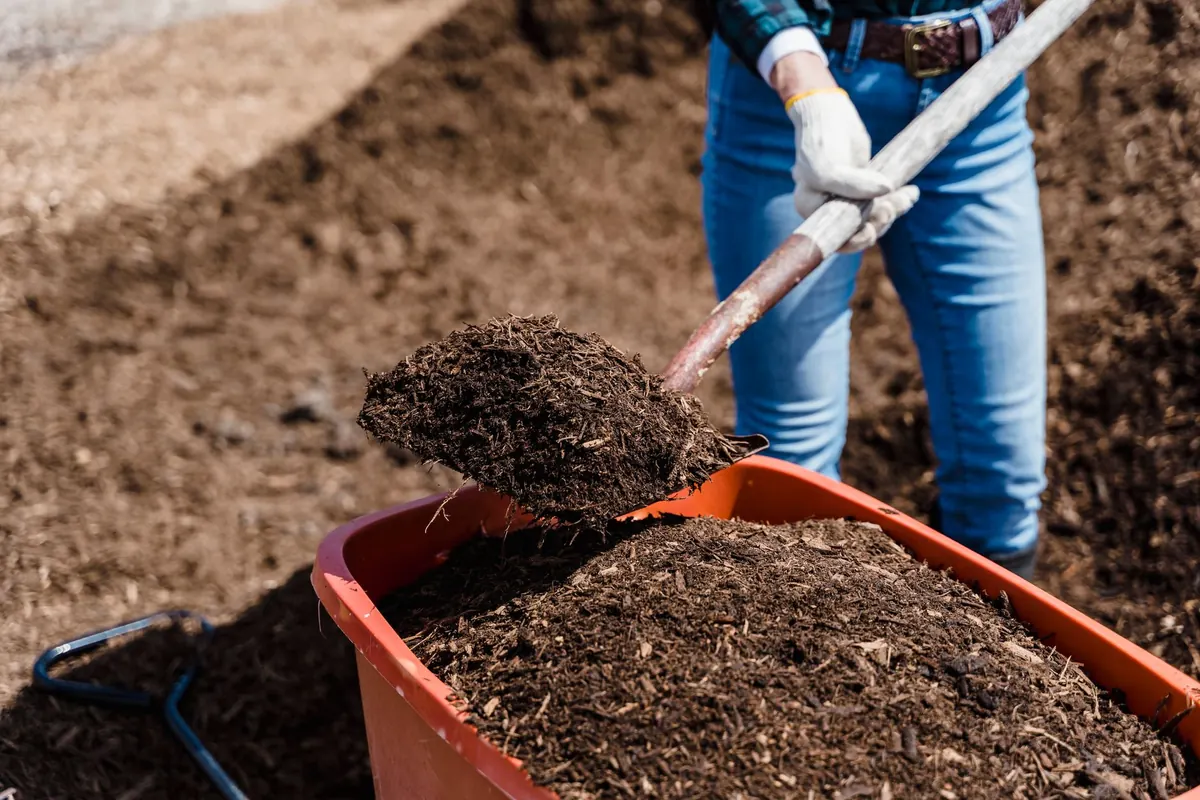
Walk into any garden centre in early spring and you will find them stacked within a few metres of each other: bags of compost, bags of manure, bags of leaf mold. The packaging looks similar, the shelf labels are vague, and it is easy to assume they are variations on the same product. So they get used interchangeably — a bucket of manure where compost was meant, leaf mold dug into a bed that needed feeding, compost piled as winter mulch on plants that would have preferred something leaner.
They are not interchangeable. Each carries a different amount of food, releases it at a different speed, changes the soil in a different way, and brings its own risks. Matching the right one to the right job is the difference between a bed that feeds crops steadily all season and one that quietly sulks.
Compost is the finished product of a decomposition pile: kitchen scraps, grass clippings, soft prunings, spent annuals, whatever the heap has had time to break down. Ready compost smells of damp woodland and crumbles in the hand. Its nutrient content is modest but broad, and its real worth is biological — good compost is alive in a way that bagged feed never is.
Manure is dung, usually mixed with bedding such as straw, shavings or woodchip. It is a feedstock more than a finished product, and the stage of breakdown matters enormously. Fresh manure is potent and risky. Aged or properly composted manure is one of the best slow-release feeds a garden can get.
Leaf mold is the odd one out: just leaves, left in a bin or a corner for a year or two until fungi reduce them to a soft, dark, friable material. Nutritionally it is close to worthless. Structurally, nothing else in this comparison comes close.
Bagged products carry an NPK figure on the back. Homemade ones do not, and nobody can tell you the analysis of your own compost without a laboratory test. What you can rely on are broad patterns.
Compost typically lands somewhere around a low, roughly balanced analysis — often near 1-1-1, though the range is wide depending on what went in. Its nitrogen is locked up in organic matter and released slowly by soil life, which is why it feeds plants gently over months rather than in a rush.
Manure has the widest spread of the three. Poultry manure is among the richest materials most gardeners can get hold of; horse manure bulked out with heavy straw bedding is far weaker, closer to a mulch than a fertilizer. Fresh manure also carries a lot of soluble nitrogen and salts, which is exactly what burns young roots and scorches seedlings.
Leaf mold contributes almost nothing in the way of nitrogen, phosphorus or potassium. It earns its place by improving the soil's ability to hold water and exchange nutrients, and by feeding the fungal side of the soil community. If your plants are pale, spindly and slow, leaf mold will not fix that. Compost or aged manure will.
Compost is the flexible one. Spread 5cm over empty beds in autumn and let worms and weather work it in over winter. In spring, 2–3cm scratched into the top 10cm is plenty before sowing. It also works as a mid-season mulch around hungry crops.
Manure needs a gap between application and planting. Autumn is the sweet spot for beds that will grow brassicas, squash or potatoes the following season — give it three to six months to mellow. Fresh manure should be stacked and left, or spread on empty ground in autumn and never brought near growing roots. Keep it away from beds you plan to sow within a couple of months, particularly root crops and leafy salads.
Leaf mold is best used in autumn as a mulch or in spring as a soil conditioner. Making it is slow: one to two years in a wire bin in a damp, shady corner. Shredding leaves with a mower before binning them roughly halves the wait. Oak, beech and hornbeam break down slowly; sycamore and lime are quicker.
Manure carries by far the highest weed risk of the three. Seeds pass through an animal's gut intact, and horse manure in particular arrives full of viable seeds from hay and straw. If you spread it fresh, you are sowing a weed patch along with your feed.
There is a second issue worth knowing about. Herbicide residues — aminopyralid and clopyralid are the usual culprits — can survive passage through livestock and persist in manure and straw for a long time. They cause distorted, curled, strapped growth in tomatoes, potatoes, beans, peas and roses, and the damage can last more than one season. It is worth asking a supplier where the manure and bedding came from, and worth running a simple test on a new source: fill a couple of pots with the manure mixed into compost, grow a broad bean or a tomato seedling in each, and watch for curling leaves over the first few weeks.
Compost is lower risk but not risk-free. A heap that never gets hot enough will not kill every weed seed, especially if it contains seeding annuals or perennial roots. If you suspect your compost is carrying seeds, use it as a surface mulch rather than digging it in, and pull the seedlings early. Leaf mold is the safest of the three — leaves are raked from clean ground and the pile stays cool and fungal — though a few wind-blown seeds will always find their way in.
Once you stop treating the three as one product, the choices get easier:
The pattern behind that list is simple. Compost and manure feed. Leaf mold builds. Whenever a bed needs both — which is most beds, most years — the answer is a combination, not a swap.
Feed with compost and manure, build with leaf mold, and keep the three in separate mental boxes. If you have room or budget for only one, make it compost: it is the most versatile, the safest, and the most useful to soil life. Add leaf mold as a second if you can, particularly if your soil is heavy, light, or dries out fast. Manure comes third, and only from a source you trust.
Three habits make the difference. Start a leaf bin this autumn, even if it is just a wire hoop behind a shed. Test any new manure source with a few bean seedlings before it goes on a bed. And spread compost as a mulch rather than digging it in — the worms will do the incorporation for you, and the soil structure will thank you for not being turned over again.
Photo: Greta Hoffman / Pexels
A practical beginner’s guide to growing vegetables on windy, sun-baked balconies, with pot sizes, compost advice and...
A soil test report is only intimidating until you know which numbers change your decisions. Here's how to read pH,...
A practical guide to deadheading: where to pinch, how to angle the cut, and which flowers to leave alone so seed...

Cultivating beauty in every garden corner.
